Start with the official GLC list
Do not start with Google, social media or a photograph of a business card. Start with the regulator: the General Legal Council of Jamaica.
The GLC publishes a current-year list of attorneys who have been issued practising certificates entitling them to carry on private practice in Jamaica. Search the attorney’s full name, then compare the result with the person and firm you are dealing with.
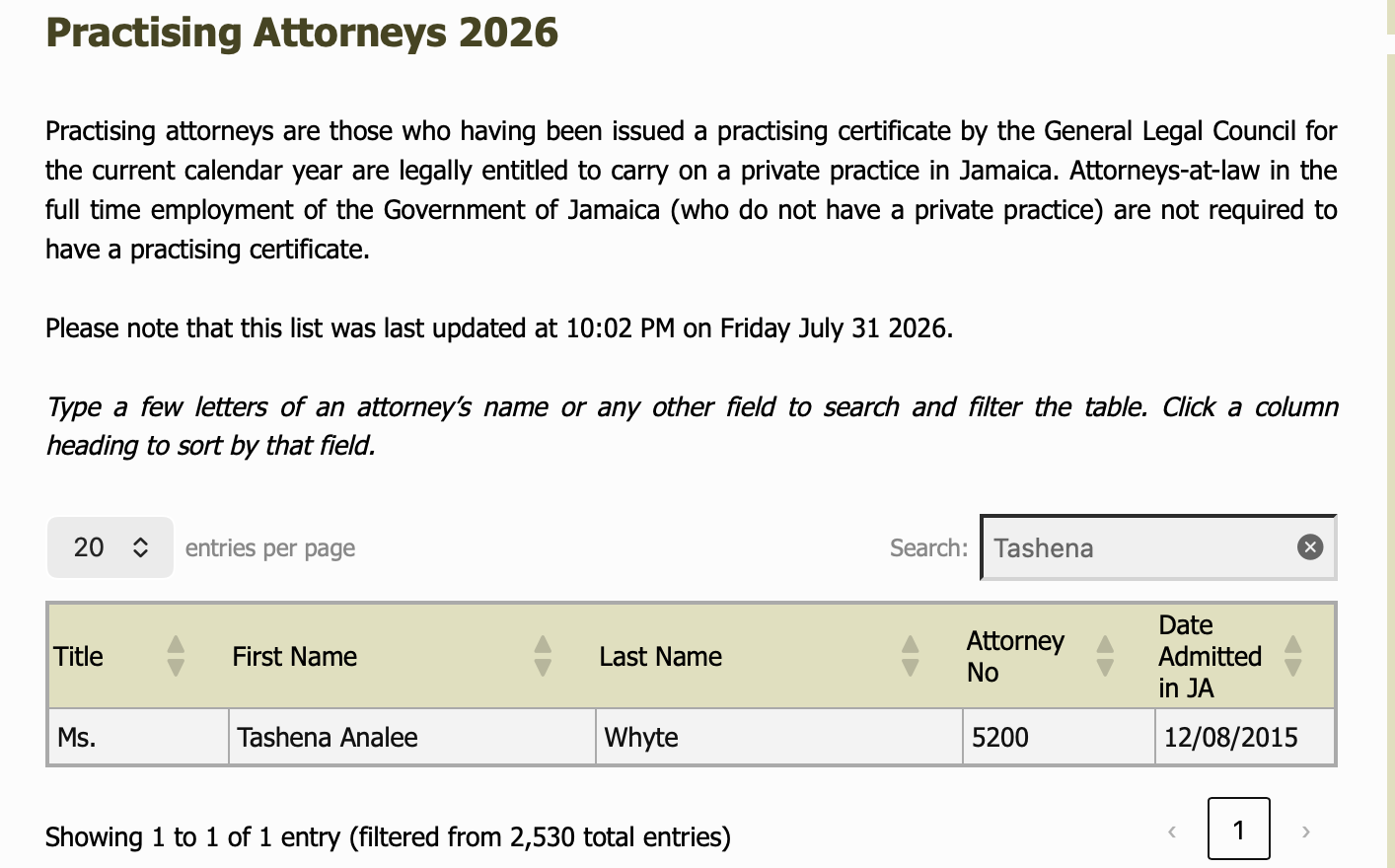
The official result shows Ms. Tashena Analee Whyte, attorney number 5200 and an admission date of 8 December 2015. The directory displays that date as 12/08/2015.
Open the official GLC search →The GLC page stated that its 2026 list was last updated on 31 July 2026. This screenshot is a dated example, not a live status check. Always search the current GLC directory before instructing or paying an attorney.
The person appears on the GLC’s list of attorneys issued a practising certificate for the current calendar year. That is the most useful first check for someone offering private legal services in Jamaica.
Verify in five minutes
Ask for the exact enrolled name
Do not search only a nickname, initials or a firm name. Ask for the attorney’s full enrolled name and attorney number.
Use the current-year GLC list
Type a few letters of the first or last name. Confirm that the result is from the current calendar year, not an old certificate or saved screenshot.
GO TO THE OFFICIAL DIRECTORY →Match all three data points
Compare the full name, attorney number and admission date with the certificate and written engagement documents.
Check the GLC warning lists
Review the current suspended and disbarred-attorney pages and search published disciplinary decisions. A directory match is not a substitute for those checks.
Verify the firm before paying
Get a written engagement letter. Call a number obtained independently from the firm’s official website to confirm the person, scope of work and payment instructions.
What an official match looks like
The database entry and certificate should tell the same story. The design below demonstrates the comparison without reproducing an actual official certificate.
Search record
- Full name
- Tashena Analee Whyte
- Attorney No.
- 5200
- Admitted
- 8 December 2015
- Directory year
- 2026
Practising Certificate
Attorney-at-Law No. 5200
Current calendar year: 2026
What the listing does not prove
A current practising entry is essential, but it does not answer every question about who should handle your matter.
Ask who will do the work and for relevant experience in property, probate, family or business law.
A criminal can impersonate a real attorney. Independently verify contact and banking information.
Get the scope, fees, disbursements and payment schedule in writing before sending funds.
Stop before paying if you see these red flags
The person is offering private legal services but cannot be found on the current list.
The year, name or attorney number does not agree with the GLC database.
You are told to use a personal account or remittance service without written explanation.
New instructions arrive suddenly and you are pressured to act before confirming them by telephone.
There is no clear record of who represents you, what will be done or how much it will cost.
The person will not join a telephone or video call or explain where the firm operates.
If bank details change, pause.
- Do not reply to or telephone the number in the change email.
- Find the firm’s number independently from its official website or your signed engagement letter.
- Speak with the attorney or an identified staff member and read the account details back.
- Do not send funds until the discrepancy is resolved.