Why the U.S. grant is not enough
Probate authority is territorial. A grant issued by a U.S. court gives the personal representative authority under the law of that U.S. jurisdiction. It does not automatically give that person authority over land, bank accounts or other estate assets in Jamaica.
Jamaica has a statutory process for re-sealing certain foreign grants. Section 3 of the Probates (Re-Sealing) Act applies to grants made by a Court of Probate in a part of the Commonwealth, or by a qualifying British court in a foreign country. An ordinary U.S. state-court probate grant does not fall into those categories.
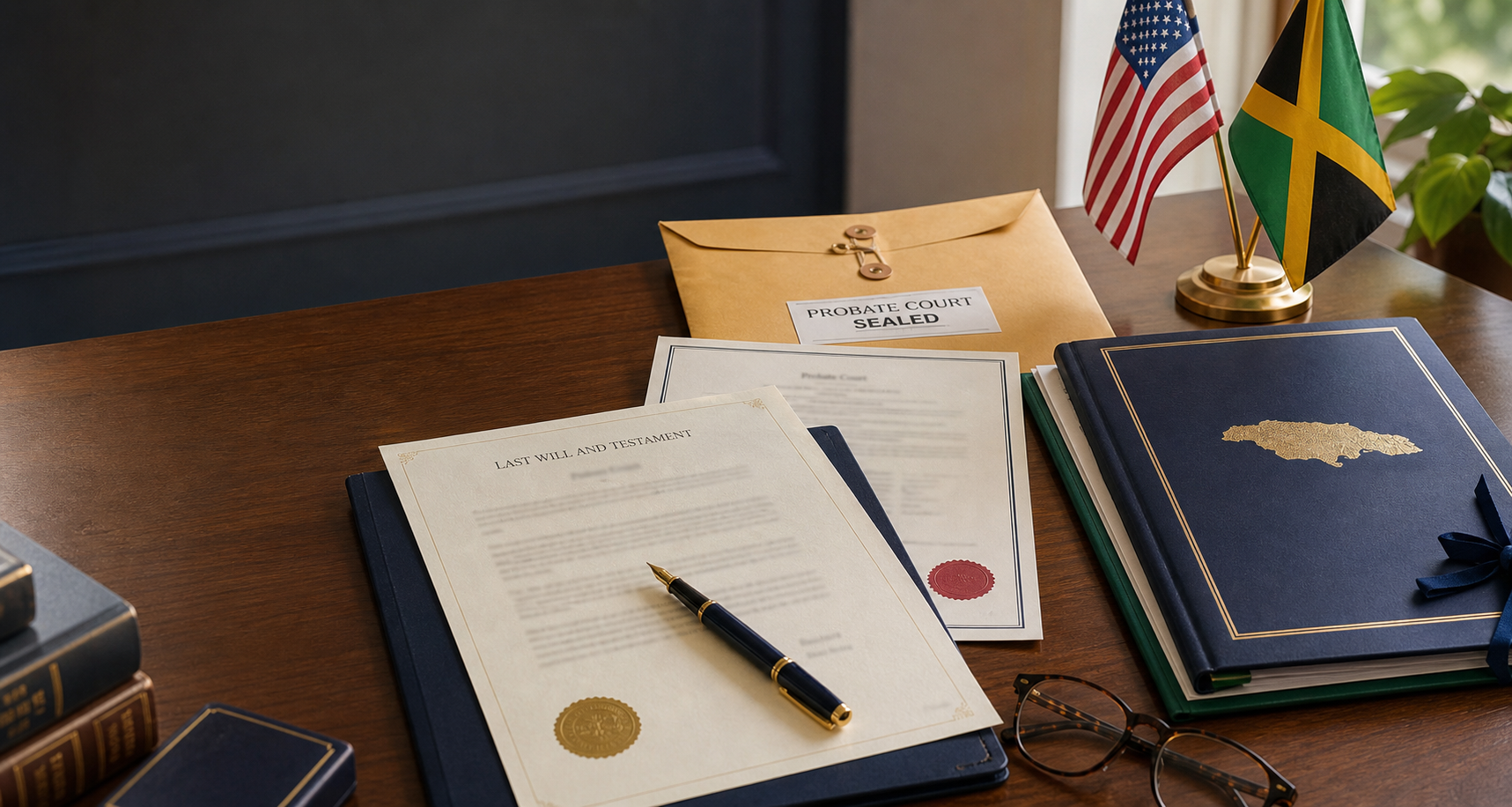
Re-sealing and a fresh Jamaican grant are not the same
Commonwealth grant May qualify
An eligible grant may be presented to the Supreme Court of Jamaica for re-sealing, subject to the statutory conditions and court rules.
United States grant Not resealable
A separate Jamaican application is generally needed. The form of grant depends on the will, the appointed executor and the circumstances of the estate.
The Jamaican application may be for probate, or in some cases for letters of administration with the will annexed. The correct route should be confirmed after reviewing the will, the foreign grant, the executor’s position, the deceased’s domicile and the Jamaican assets.
What if the U.S. court keeps the original will?
That is a likely and important issue. Jamaican probate applications ordinarily proceed with the original testamentary document. Where the original was deposited in and retained by the U.S. court, the Jamaican applicant should not describe an ordinary photocopy as the original or simply file it without explanation.
What the supporting evidence should address
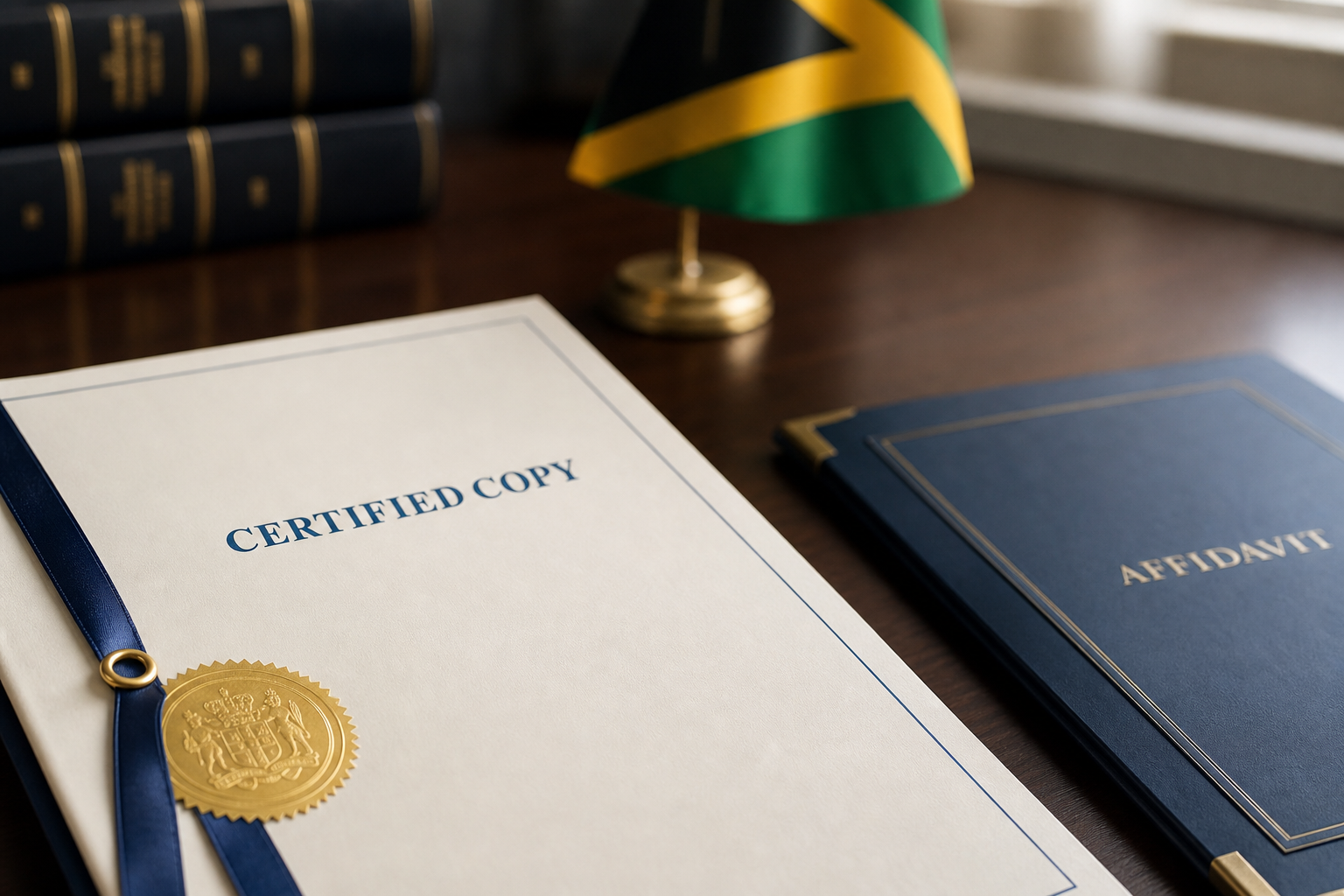
This is different from the classic “lost will” case. If the original is safely held by a U.S. court, the evidence can positively explain its location and establish the provenance of the authenticated copy. If the original cannot be located at all, additional evidence may be needed to address possible revocation and the accuracy of the copy.
The Jamaican process at a glance
Identify the Jamaican assets
Confirm whether the estate includes registered land, bank funds, shares, insurance proceeds or other property situated in Jamaica.
Obtain the authenticated U.S. court record
Request a court-certified or duly authenticated copy of the will, the U.S. grant and evidence that the original remains in the court’s custody.
Apply to admit the copy will to proof
File the preliminary application and affidavit evidence required by rule 68.17, asking the Jamaican court for permission to prove the authenticated copy.
Prepare the Jamaican grant application
Once permission is obtained, the order is exhibited to the oath leading the appropriate grant of probate or administration with the will annexed.
Address domicile, execution and foreign law
The court may require evidence concerning due execution, the deceased’s domicile and the effect of the relevant U.S. law.
Obtain the Jamaican grant
After the court is satisfied and any requisitions are answered, the grant supplies local authority to administer the Jamaican estate.
Transfer or distribute the Jamaican assets
The representative can then complete the land, banking or investment procedures required for each asset.
Documents families should start gathering
Exact requirements vary. These are sensible starting documents, not a final filing checklist.
Two common misunderstandings
The U.S. grant does not automatically confer authority over Jamaican assets.
Yes. Certified documents from that case may support the separate Jamaican application.
A foreign appointment alone is generally insufficient to complete a lawful transfer of Jamaican estate property.
Early legal review can prevent invalid steps, delay and avoidable expense.
Questions families often ask
Can Jamaica probate a court-certified copy if the U.S. court keeps the original?
Potentially, yes. The applicant would ordinarily first seek an order under rule 68.17 admitting the authenticated copy to proof, supported by affidavit evidence explaining the foreign court’s custody and establishing the copy’s authenticity. The order would then support the substantive Jamaican grant application.
Does the will itself become invalid because it was made in the United States?
No. The re-sealing issue concerns the authority created by the foreign grant. Whether the will is formally valid and how it applies to Jamaican assets are separate questions that depend on execution, domicile and applicable law.
Must every U.S. estate apply in Jamaica?
No. A Jamaican application is relevant where the deceased had assets or estate business requiring legal authority in Jamaica. If there are no Jamaican assets, a Jamaican grant may serve no practical purpose.
Can the same U.S. executor apply in Jamaica?
Often the named executor’s position is central, but the correct applicant and grant depend on the will, the U.S. proceedings and Jamaican probate rules. Counsel should review the complete file before filing.
Can this be handled while the family remains overseas?
Much of the preparation can usually be coordinated remotely. Original or certified documents, formal affidavits and local filing requirements still have to be managed carefully.
Important: This article provides general information, not legal advice. Probate procedure depends on the wording and execution of the will, the deceased’s domicile, the foreign court record, the identity of the applicant and the nature of the Jamaican assets.