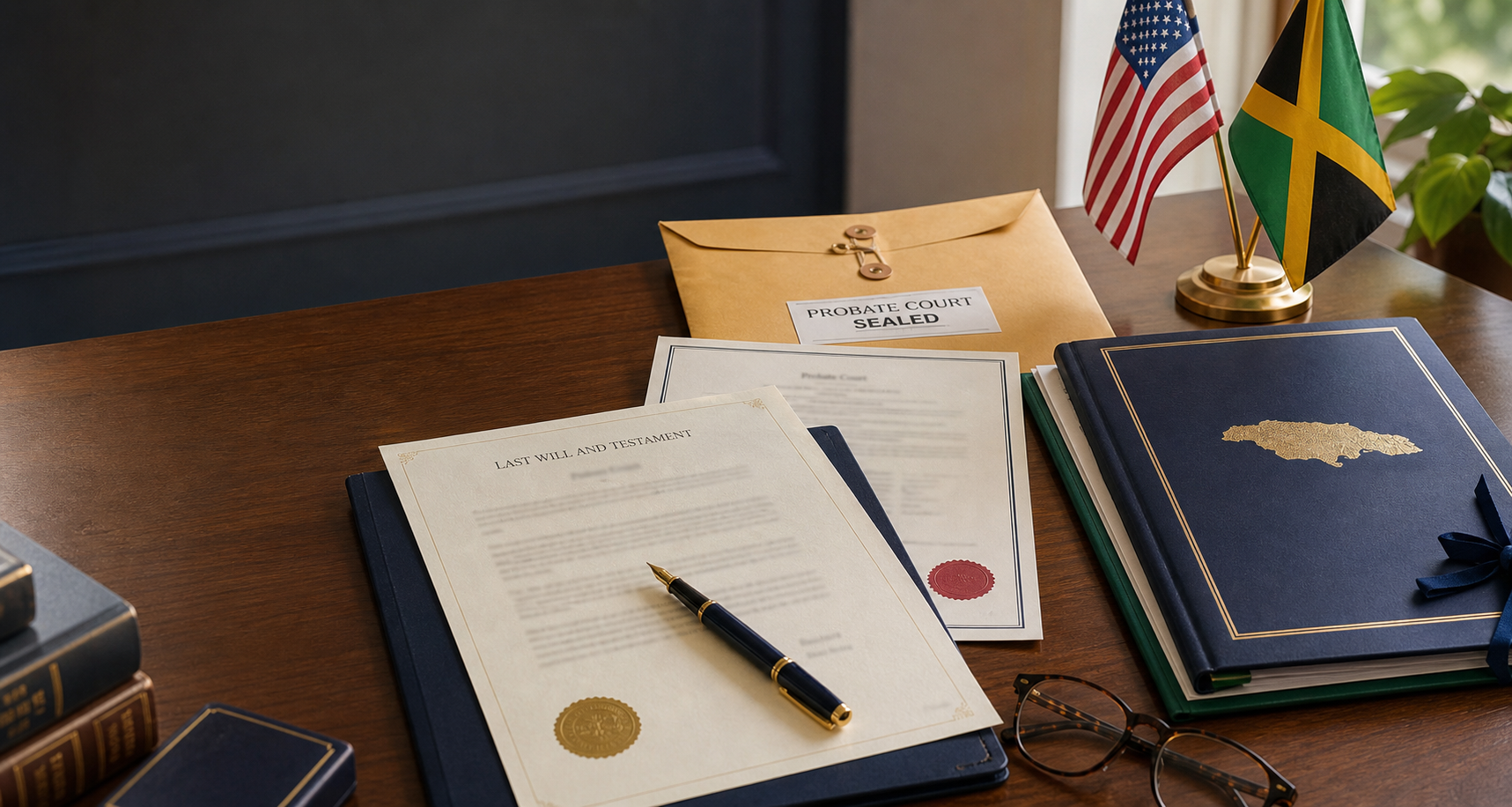
Probate in Jamaica for Overseas Executors
A practical guide for executors abroad handling Jamaican probate, from key steps to filing timelines.
Managing a loved one's estate in Jamaica while living in the United States, the United Kingdom or Canada can feel daunting. The good news is that Jamaican law is well set up for executors abroad. With the right documents and a Jamaican attorney-at-law handling the filings, many overseas executors complete the process without travelling to Jamaica. This guide explains how the process works and how to avoid the delays that catch out diaspora families.
What Probate Means in Jamaica
Probate is the legal process by which the Supreme Court of Jamaica confirms that a will is valid and authorises the executor named in it to administer the estate. The court issues a Grant of Probate, which is the executor's legal authority to collect the deceased's assets, pay debts and distribute what remains to the beneficiaries.
Without a grant, banks will generally not release accounts, the National Land Agency (NLA) will not update a land title and buyers cannot safely purchase estate property. The will must satisfy the formal requirements of the Jamaican Wills Act, including proper signing and witnessing.
Probate, Letters of Administration and Resealing
Overseas families usually fall into one of three routes. Choosing correctly at the start can save months of delay.
- •Grant of Probate applies where the deceased left a valid will naming an executor.
- •Letters of Administration apply where there is no will. Intestacy is governed by the Intestates' Estates and Property Charges Act, which sets out how the estate is shared among the spouse, children and other relatives. The right to apply generally follows that entitlement, and where minors benefit the Administrator General's Department may have a role.
- •Resealing applies where probate has already been granted abroad. Under the Probate (Re-Sealing) Act, a grant from the United Kingdom and many Commonwealth jurisdictions (including Canadian provinces) can be resealed by the Supreme Court so that it takes effect in Jamaica without starting from scratch. A United States grant generally cannot be resealed, so a fresh Jamaican application is usually needed.
Who Can Apply and How an Overseas Executor Acts
The executor named in the will applies, and living abroad does not disqualify you. Jamaican practice allows an overseas executor to act through a Jamaican attorney-at-law, who prepares the application, files it at the Supreme Court registry, responds to queries and handles the follow-on work at the NLA and the banks. You sign the court documents where you live, have them properly certified and courier them to Jamaica. Travel is rarely necessary for a straightforward estate.
Core Documents Typically Required
Every estate is different, but most applications need:
- •the original will (not a photocopy)
- •a certified death certificate issued by the Registrar General's Department
- •government-issued identification for the executor and, in most cases, a Jamaican Taxpayer Registration Number (TRN)
- •details of the assets: certificates of title, bank account information, motor vehicles and investments
- •valuations of significant assets, especially land
- •evidence that the estate's tax position with Tax Administration Jamaica (TAJ) is in order
We confirm the exact list at consultation, because defective documents are one of the most common causes of registry queries and delay.
Getting Overseas Documents Right: Notarisation and Apostille
Documents signed outside Jamaica generally need to be notarised by a notary public in your country. For countries party to the Hague Convention, which includes the United States, the United Kingdom and Canada, the notarised document should also carry an apostille, an official certificate that authenticates the notary's signature for use abroad.
Getting this right first time matters. A rejected affidavit means a fresh signing, a fresh apostille and weeks lost in the post. We give overseas executors precise signing instructions for their country.
Step-by-Step: The Jamaican Probate Process
Gather the core documents: the will, death certificate, titles and account details.
Value the estate and confirm the tax position with TAJ.
Prepare the application, including the executor's oath and any supporting affidavits the registry requires.
File at the Supreme Court and attend to any advertisement requirements.
Respond to registry queries promptly, as many applications stall at this stage.
Receive the Grant of Probate.
Collect the assets: close accounts, call in debts and secure property.
Deal with the land and distribute: transfer or sell real estate, settle liabilities and pay beneficiaries.
Dealing with Jamaican Land
Registered land is governed by the Registration of Titles Act, and title changes go through the NLA Titles Office. After the grant issues, the executor is noted on the title by a process called transmission and can then transfer the property to the beneficiaries or sell it.
If the estate sells land, normal conveyancing rules apply:
- •Transfer tax of 2% of the sale price, payable by the vendor (here, the estate)
- •Stamp duty of a flat J$5,000 per agreement for sale, typically shared J$2,500 each side
- •The NLA registration fee of 0.5% of the price, normally split equally between vendor and purchaser
- •A deposit of 5% to 10%, the typical range on Jamaican agreements for sale
Our estate administration team handles both the probate and the conveyancing, so nothing falls between the two.
Taxes and Fees on Death
Transfers on death are treated differently from an ordinary sale: transfer tax on death is charged at 1.5% of the net estate value above J$10,000,000 and estates valued at or below that threshold pay none. Court filing is J$5,000, stamp duty on the grant is J$10,000 and NLA fees of about J$5,000 apply per title transmitted. Professional fees vary with the size and complexity of the estate and are confirmed in writing at consultation.
Timeline Expectations
Timelines vary with estate complexity and court volumes. A straightforward, well-documented estate can move from filing to grant in a matter of months, while estates with title problems, missing documents or family disputes take longer. No attorney can guarantee a date, but clean paperwork filed right the first time is the strongest lever you have.
Practical Tips for Executors Abroad
- •Locate the original will early and keep it safe; a copy is not a substitute.
- •Build a full asset list: titles, account numbers, vehicle documents and insurance policies.
- •Obtain several certified copies of the death certificate.
- •Sort out TRNs early, since overseas beneficiaries taking Jamaican land will each need one.
- •Keep beneficiaries informed in writing and start apostille arrangements early.
How Whyte Law Helps
Whyte Law is based in St Ann's Bay and regularly acts for clients across the United States, the United Kingdom and Canada. We prepare the application, manage the Supreme Court filing, handle transmission at the NLA and keep you updated at every stage, without you needing to travel. Estate consultations are paid, while will consultations are currently free. To get started, book a consultation in office in St Ann's Bay or online from anywhere in the world and we will map out your estate's exact path to a grant.
Book a consultationSource References
- •Wills Act (Jamaica)
- •Intestates' Estates and Property Charges Act (Jamaica)
- •Probate (Re-Sealing) Act (Jamaica)
- •Registration of Titles Act (Jamaica)
- •Supreme Court of Jamaica, Probate Registry
- •National Land Agency (NLA)
- •Tax Administration Jamaica (TAJ)
- •Registrar General's Department (RGD)
- •Administrator General's Department (Jamaica)
Frequently Asked Questions
Do I have to travel to Jamaica to deal with probate?+
No. Jamaican practice allows an overseas executor to act through a Jamaican attorney-at-law who prepares and files everything at the Supreme Court. You sign the documents in your own country, have them notarised and apostilled where required and courier them to Jamaica. Travel is rarely needed for a straightforward estate.
I already have a grant of probate in the UK or Canada. Do I need to start again in Jamaica?+
Usually not. Under the Probate (Re-Sealing) Act, a grant from the United Kingdom and many Commonwealth jurisdictions, including Canadian provinces, can be resealed by the Supreme Court of Jamaica so it takes effect locally. A United States grant generally cannot be resealed, so a fresh Jamaican application is normally required.
How long does probate take in Jamaica?+
It varies with the estate's complexity and the court's workload. A straightforward, well-documented estate can move from filing to grant in a matter of months, while estates with missing documents, title problems or family disputes take longer. Filing clean, complete paperwork the first time is the best way to avoid delay and exact expectations are discussed at consultation.
What happens if my relative died without a will?+
The estate falls under the Intestates' Estates and Property Charges Act. Instead of probate, an entitled relative, usually the spouse or a child, applies to the Supreme Court for Letters of Administration. The Act sets out how the estate is shared among the family. An overseas applicant can still act through a Jamaican attorney without travelling.
Is there tax to pay when inheriting Jamaican property?+
Jamaica applies a relief regime to transfers on death, so passing property to beneficiaries is treated differently from an ordinary sale. If the estate sells land, transfer tax of 2% falls on the vendor and other conveyancing costs apply. Figures depend on the estate's value and the current rules, so exact amounts are confirmed at consultation.
Need help with your matter?
Book a consultation to discuss your situation and get clear guidance on next steps.
This is general information, not legal advice. Outcomes depend on the facts of each case.
Reader check-in
Was this guide helpful?
A quick check before you leave.