Good Cop, Bad Practice: Police Officer Cannot Serve Civil Court Documents
Published by Whyte Law. About our legal guides
The police serve criminal papers. A divorce petition or a claim form is civil process, and no member of the JCF may serve it. Get that wrong and the Registry sends the papers back, service starts over and months are lost.
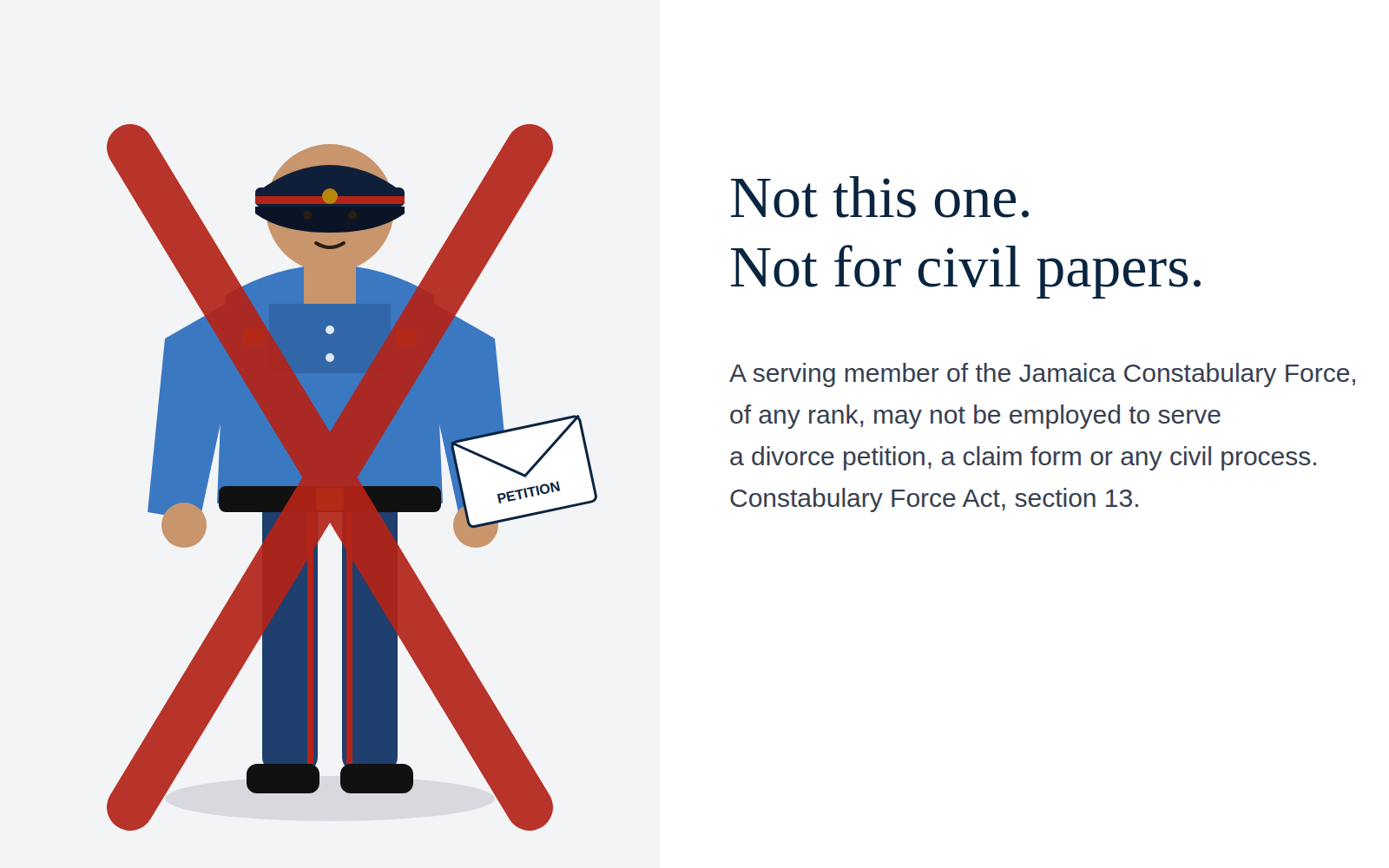
A friend in the police force offers to hand your divorce petition to the other side. It feels like a favour. It feels fast. The uniform opens doors.
It is a common mistake.
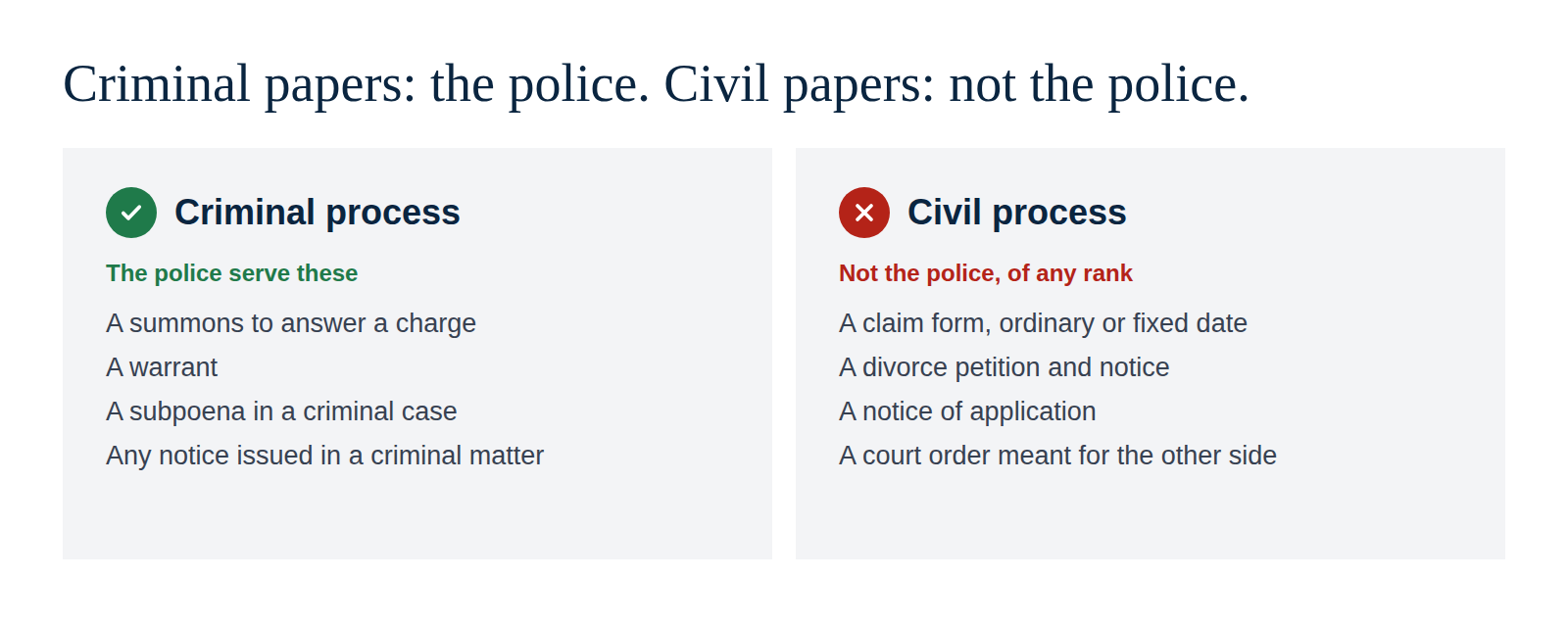
The Registry sends those papers back. Service must be done again, by someone else. The other side's time to respond runs from the new date. Then the court vets the papers again, and with the backlog that wait runs to months. One helpful friend, months lost. You pay for the work twice.
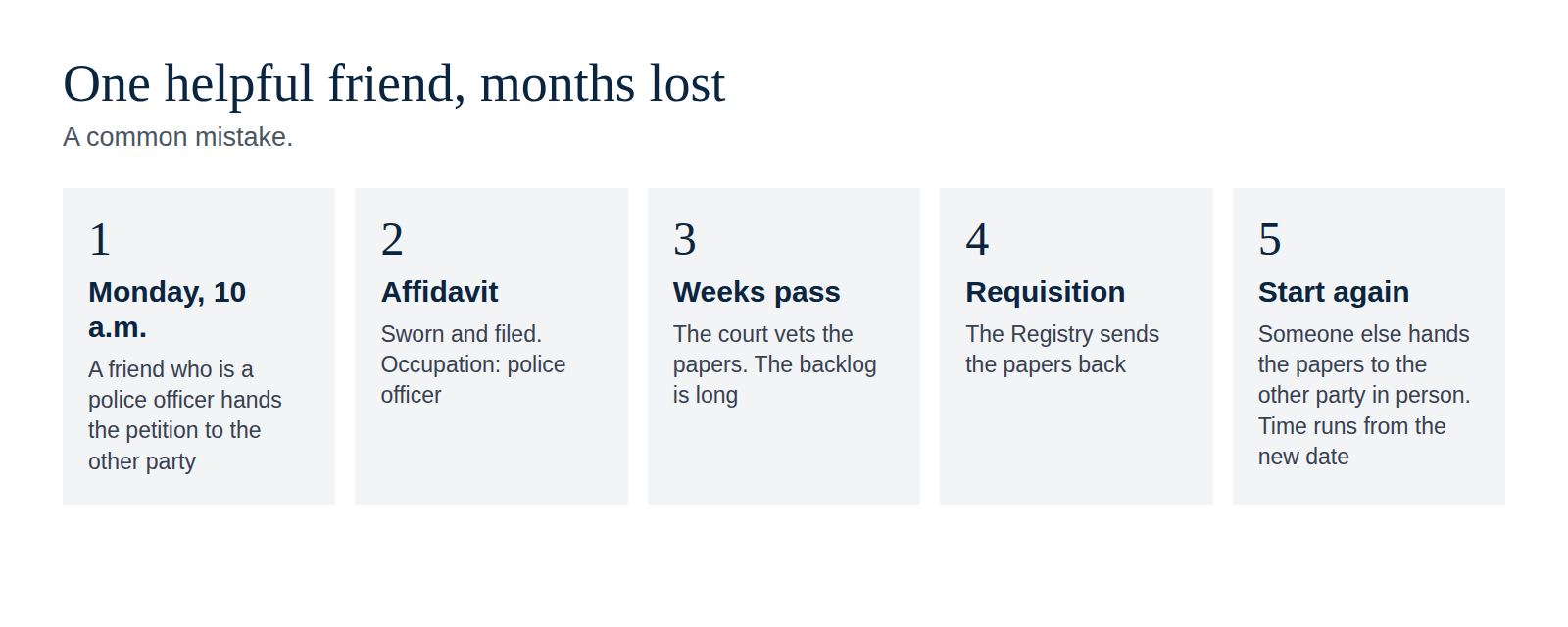
Here is why. The police serve criminal papers. The law that sets out the duties of the Force lists summonses, warrants, subpoenas and notices in criminal matters. Then it says plainly that no member of the Force may be employed to serve civil process. That reaches every rank. A divorce petition is civil process. A claim form is civil process. A notice of application, a court order meant for the other side, all civil process. A badge does not change that.
A flaw in service does not always kill a case. It can wound it. In a divorce, the Registrar may issue a requisition. You go back and serve the papers properly. In a civil claim, a default judgment built on bad service can be set aside. The victory unravels. Either way, the price is time.
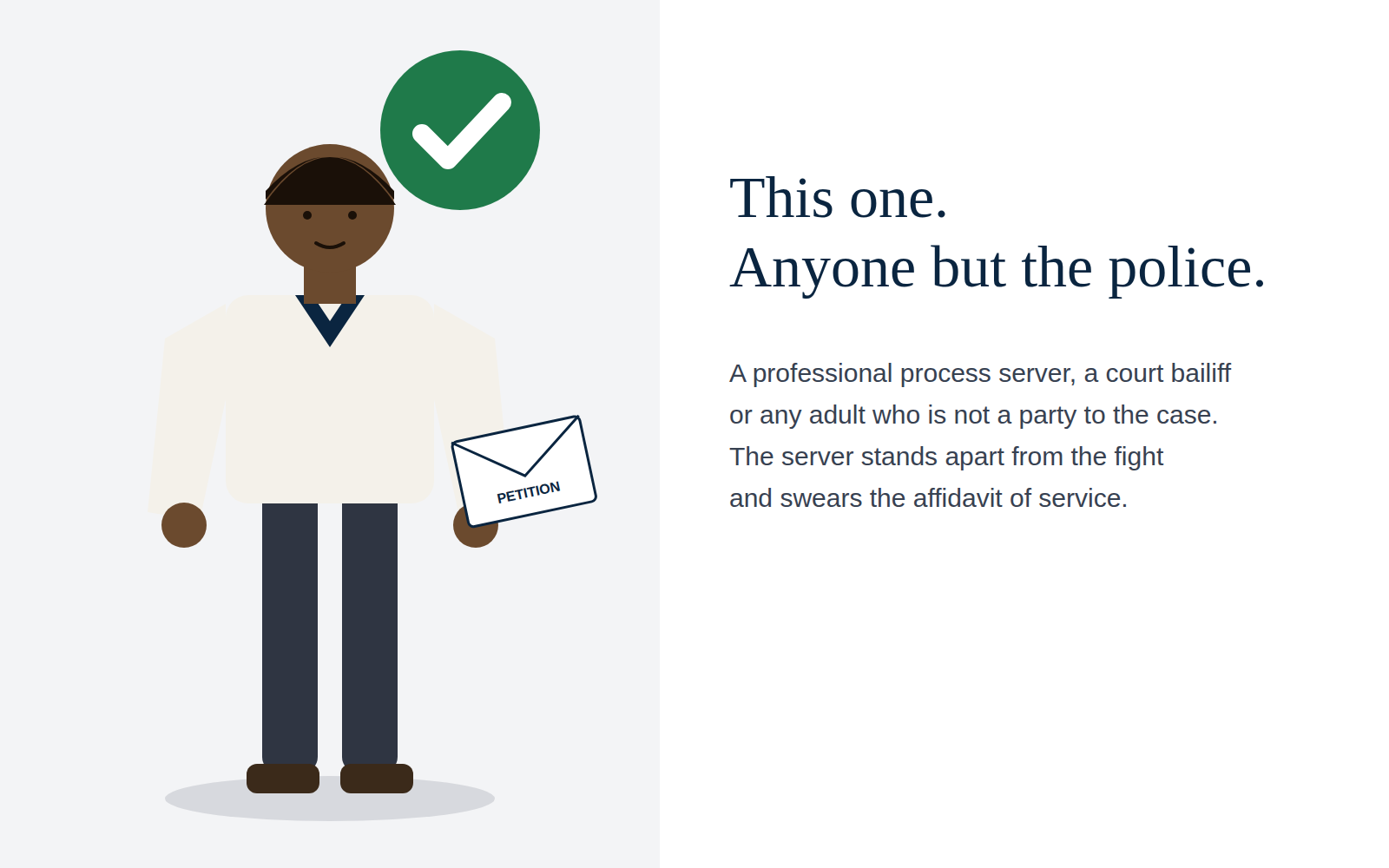
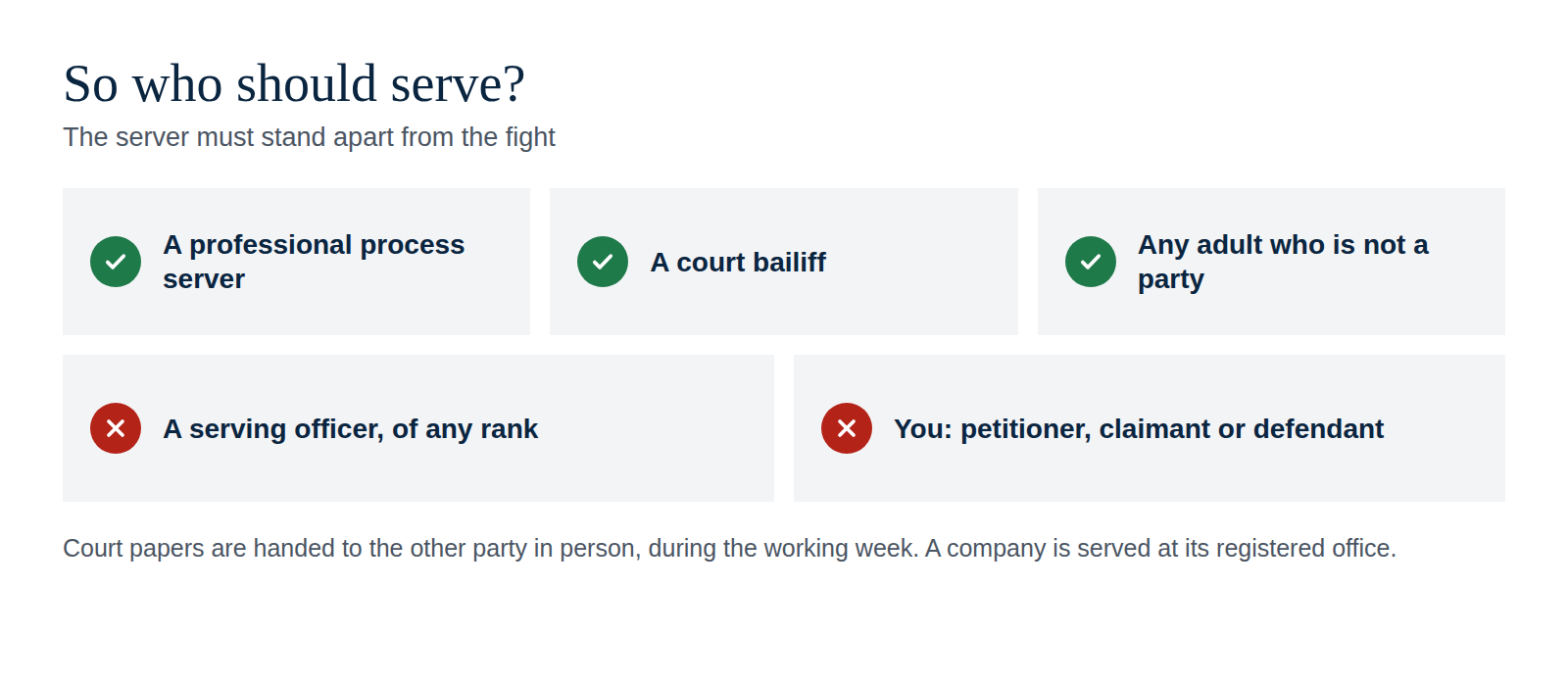
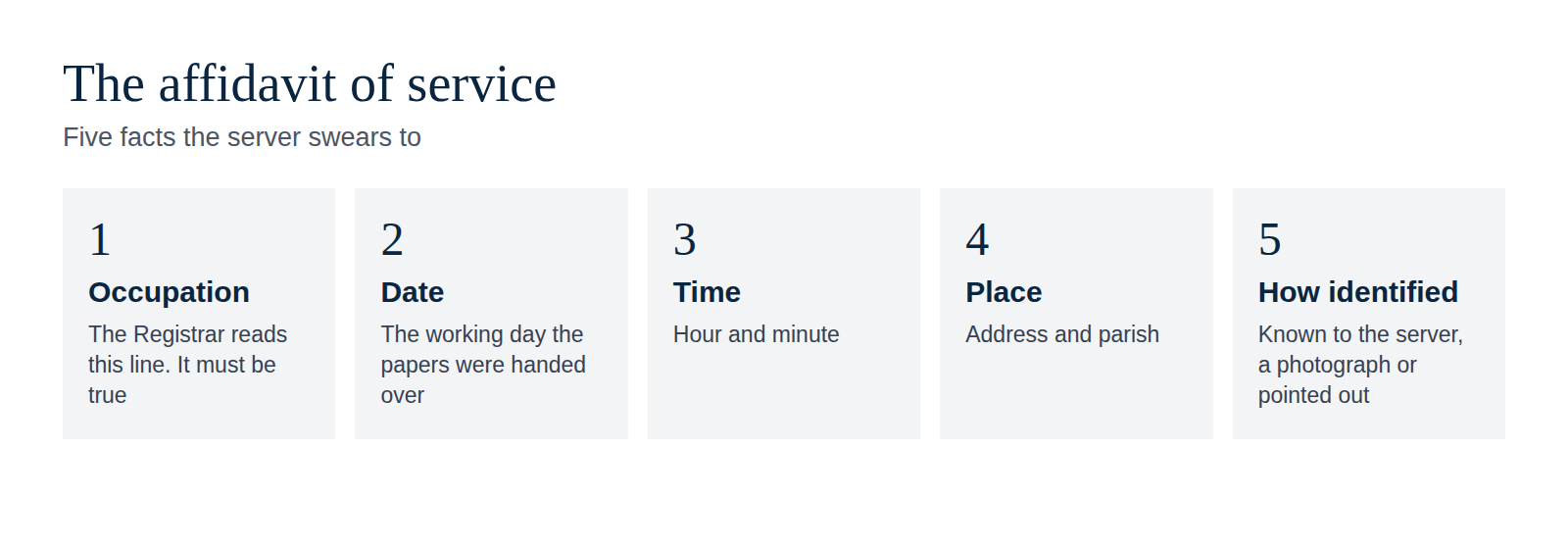
So who should serve? A professional process server. A court bailiff. Any adult who is not a party to the case. Not a serving officer, of any rank. Not you, whether petitioner, claimant or defendant. The server must stand apart from the fight. The server swears an affidavit of service: occupation, date, time, place and how the person was identified. The Registrar reads the occupation line. It must be true.
One question, asked early, saves months later. Before you collect the papers from your attorney to serve them, or engage a process server, make sure the person serving is not a member of the JCF. And remember that civil papers are personally served. That means handed to the person. Not left nearby. Handed.
Questions readers ask
Frequently Asked Questions
Can a friend who is a police officer serve my divorce petition?+
No. The law that sets out the duties of the Force says no member of the Force may be employed to serve civil process. The Registry sends those papers back and service must be done again by someone else.
Can the police serve a criminal summons?+
Yes. Summonses, warrants, subpoenas and notices in criminal matters are the papers the police serve.
Who should serve a divorce petition or a claim form in Jamaica?+
A professional process server, a court bailiff or any adult who is not a party to the case. Not a serving officer of any rank, and not the petitioner, claimant or defendant. The papers are handed to the other party in person.
Personal guidance
Need help with your matter?
Book a consultation to discuss your situation and get clear guidance on next steps.
This is general information, not legal advice. Outcomes depend on the facts of each case.
Reader check-in
Was this guide helpful?
A quick check before you leave.