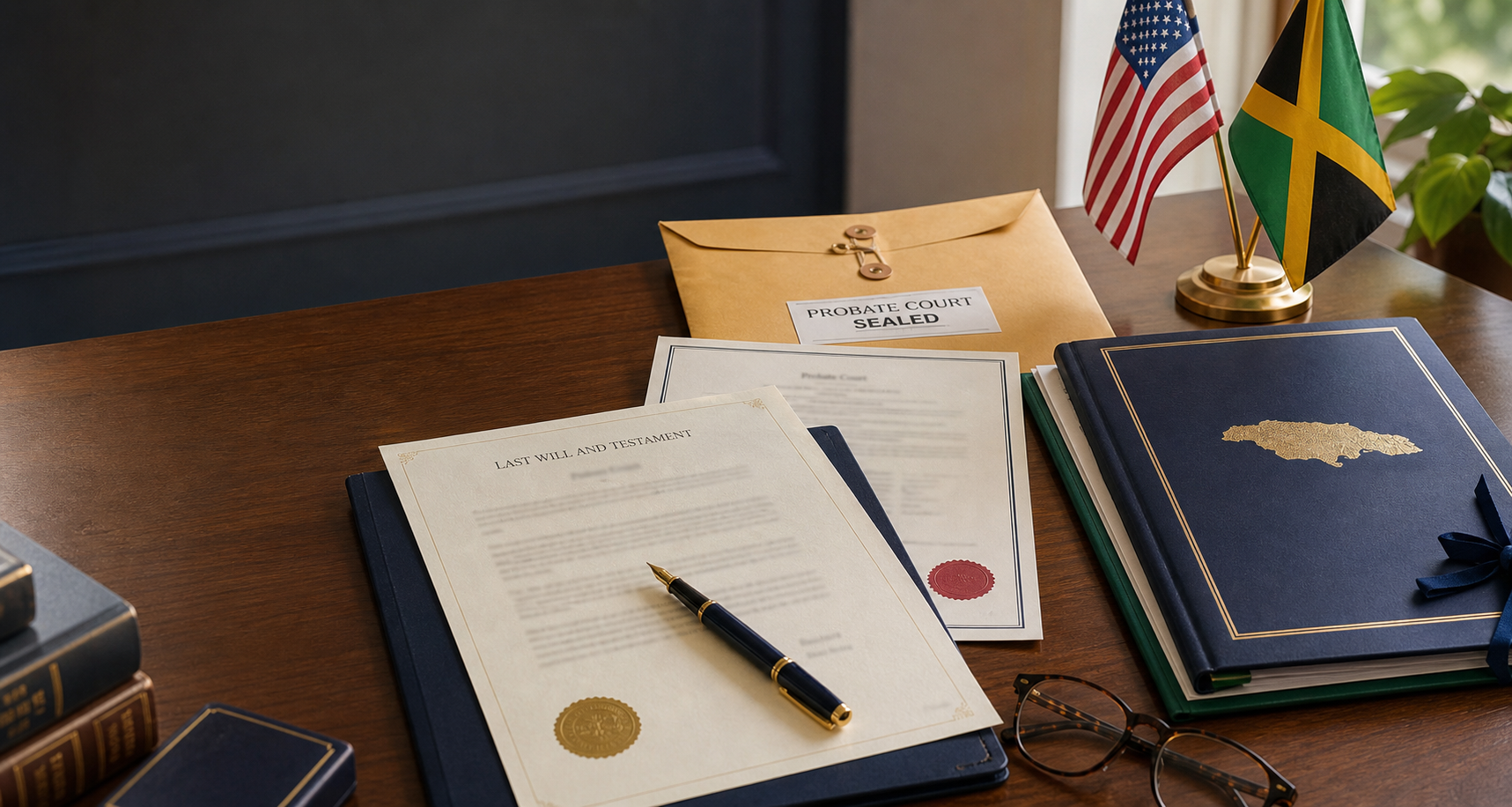
Dead Lef, Live War: Why Dying Without a Will Leaves Families Waiting
Published by Whyte Law. About our legal guides
More than five thousand intestate estates are under administration in Jamaica, involving almost J$50 billion in property and almost J$5 billion in cash. A will helps you plan for the people you leave behind.
The Will You Never Wrote Is the Fight You Left Behind.
The figures reported by The Gleaner on 10 June 2026 should stop every Jamaican in their tracks.
The Administrator-General’s Department is managing more than five thousand active estates of people who died without wills. These involve approximately four thousand properties worth almost J$50 billion, alongside almost J$5 billion in cash assets under administration.
Those figures describe the assets being administered. They do not measure an avoidable economic loss or establish that every property is idle and every dollar untouched. The delays and disputes are real: the Justice Minister reported that many properties were deteriorating while beneficiaries awaited distribution.
What "dead lef" really means
In Jamaica we say "dead lef" for what the dead leave behind. Too often, what they leave behind is a war.
When a person dies without a will, the law calls it intestacy. Family members do not gain authority to administer the estate simply because they are relatives. Dealing with estate assets requires the proper authority.
Letters of administration are generally needed. The Administrator General may have to step in. There is a small-estate exception: the AGD can administer qualifying intestate estates consisting only of personal property with a total value of no more than J$1.5 million without a court grant. Estates containing real property, such as land or a house, are excluded from that small-estate procedure. JIS explained the rule, citing section 53A(1) of the Administrator-General’s Act, on 11 June 2026.
Estate administration can take months or years, particularly where disputes delay distribution.
Meanwhile the family waits. And while the family waits, the family fights.
The Gleaner said it plainly in May: "Dead lef wars tearing reggae music families apart." This is not only a celebrity problem. It plays out in ordinary Jamaican households every week. Siblings stop speaking. Children discover a stranger has a claim. A house that should shelter a family becomes a battleground.
A will changes everything
A will names the person you trust to carry out your wishes. That person is the executor.
A will says who gets the house. It says who gets the land. It says who gets the savings. It removes the guesswork that breeds quarrels.
With a valid will, the executor applies for probate. The court confirms the will. The property moves. The process is shorter, cheaper and calmer than intestacy.
Without a will, the law writes one for you. You get no say in who administers your estate. You get no say in how it is divided. The statute decides, not you.
The excuses that leave families waiting
"I don't own enough to need a will." If you own a house, a piece of land or a bank account, you own enough.
"I am too young." Death does not ask for an invitation.
"My family knows what I want." Knowing and proving are different things. Only a written will speaks when you cannot.
"I will do it later." Delay can leave your family facing an intestacy you could have planned for.
What to do this month
Write the will. See an attorney. A proper will costs far less than a single year of an intestacy dispute.
Name an executor you trust. Name a backup in case the first cannot serve.
List your property clearly. Houses, land, bank accounts, vehicles, shares. Vague descriptions cause fights.
Update the will when life changes. Marriage, children, a new property, a death in the family. Review it every few years.
Keep the original safe. Tell your executor where it is. A will no one can find is almost as bad as no will at all.
The bottom line
Thousands of estates under administration. Families waiting for assets to be distributed. A will can reduce uncertainty and help prevent disputes, but it does not remove the need for estate administration or guarantee a quick outcome.
A will is not about death. It is about the people you leave behind. Write it while you can still choose.
The numbers
As reported on 10 June 2026:
- 5,000+ active intestate estates under administration
- Approximately 4,000 properties involved
- Almost J$50 billion in estimated property value
- Almost J$5 billion in cash assets under administration
Questions readers ask
Frequently Asked Questions
What happens if I die without a will in Jamaica?+
The law treats the estate as intestate. Letters of administration are generally needed, and the Administrator General may have to step in. The AGD can administer qualifying small intestate estates consisting only of personal property with a total value of no more than J$1.5 million without a court grant. Estates containing real property, such as land or a house, are excluded from that procedure. Administration and disputes can delay the sale or transfer of estate assets for months or years.
Who gets my property if there is no will?+
The law decides, not you. It sets out which relatives inherit and in what shares. You also get no say in who administers the estate.
How is probate different from letters of administration?+
A will names your executor and says who gets what, so the executor applies for probate. That is faster and cheaper. Without a will, letters of administration are generally needed, subject to the AGD small-estate exception explained above.
I do not own much. Do I still need a will?+
If you own a house, land, a bank account or a vehicle, you own enough. Most intestate estates are ordinary family homes.
Where should I keep my will?+
Keep the original somewhere safe, for example with your attorney. Tell your executor where it is. A will no one can find helps no one.
Personal guidance
Need help with your matter?
Book a consultation to discuss your situation and get clear guidance on next steps.
This is general information, not legal advice. Outcomes depend on the facts of each case.
Reader check-in
Was this guide helpful?
A quick check before you leave.