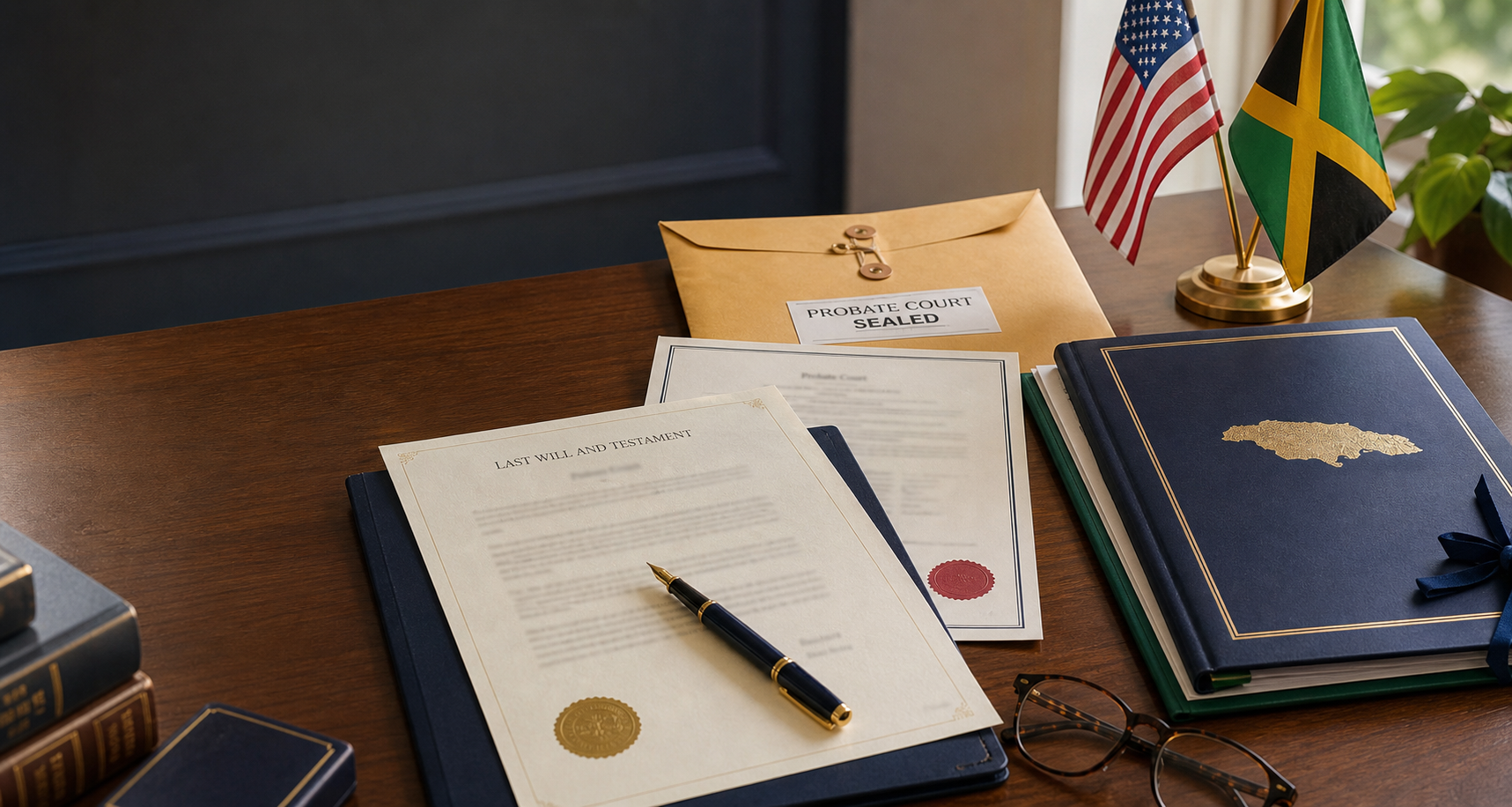
Family Land in Jamaica When Several Registered Owners Have Died
Published by Whyte Law. About our legal guides
Four owners on the title, all dead, and no court grant for any of them. Every one of those estates may have to be opened before the land can move, and the order matters.

The land in Brown's Town has been in the family for three generations. The title names your great-grandparents. Both are long dead, and so are two of their children. Your mother paid the property tax for thirty years. There is a letter, signed by your grandmother, saying the land is for her. The family agreed. Now a buyer has come, and the buyer's attorney searches the title and finds four dead people and no living owner.
Nothing the family did changed the register.
The title is the record
Living on the land, paying its tax and the family's agreement do not amend a registered title. Those facts may support some other claim, but that claim needs evidence and a court, and it is not the same as being the owner. If the land was never registered at all the route is different. Read Securing Title for Unregistered Land in Jamaica.
Two kinds of joint owner
How the owners held the land decides how many estates there are. Joint tenants pass the land to the survivor when one dies, and the death is simply noted on the title. Only the last survivor's death opens an estate. Tenants in common each own a share, and each share goes into that owner's estate when they die. Four tenants in common who have died can mean four estates to open, each with its own court grant, before the title can move. Only the title says which it was.
The letter
A signed letter is a Will only if it meets the law governing Wills and was meant to take effect on death. In the ordinary case that means it is in writing, signed at the end by the person making it and witnessed by two people present at the same time who sign in front of them. A letter signed by a grandmother alone usually fails that test. Keep it, since it may still show what the family intended, but it does not pass the land.
Opening the estates in order
Your attorney maps each registered owner: when they died, whether they left a Will, who survived them, whether a grant was ever issued and what share the title gives them. Then the estates are opened in the right order. Where an executor or administrator died before finishing the job, the court rules provide for the chain to be carried on or for a fresh grant of what is left. A beneficiary who has since died adds another estate. Done out of order, work is repeated and the time spent is lost.
Once the grants are in hand the executors and administrators are registered on the title in the deceased owners' places, and only then can the land be passed to those entitled, transferred under a written family arrangement or sold. The adults in the family can agree where the land should go, but they cannot agree away the share of a minor, a missing relative or someone who has died, and a verbal arrangement cannot be registered. The person who paid to build the house is not on the title by that fact alone, though receipts may support a claim that must be raised before the land is sold or shared. The rules for a valid Will are in the Wills Act.
Bring the title and every death certificate the family has to the first meeting. We will map the estates and tell you which comes first.
Questions readers ask
Frequently Asked Questions
Do tax receipts prove ownership of family land?+
No. They may be evidence in some other claim, but paying the property tax does not change a registered title.
Do we need a court grant for every dead person on the title?+
For tenants in common, usually yes, one for each share. For joint tenants, the earlier deaths may simply be noted and only the last survivor's estate needs a grant. The title decides.
Is a signed family letter a valid Will?+
Usually not on its own. A Will needs two witnesses present at the same time, and a letter signed by one person alone fails that.
Can the family agree to put the land in one name?+
The adults may, once every interest has been identified and the grants are in place. A minor, a missing relative or a dead beneficiary cannot be left out of that agreement.
Personal guidance
Need help with your matter?
Book a consultation to discuss your situation and get clear guidance on next steps.
This is general information, not legal advice. Outcomes depend on the facts of each case.
Reader check-in
Was this guide helpful?
A quick check before you leave.